
COUNTRY GUIDE

A short guide to building a dedicated offshore team in Poland
Get Started
Talent pool
500,000+
IT professionals
English proficiency
20 days
#15 globally
Hiring timeline
20 days
average with ALLSTARSIT
Savings vs US
~50%
on senior dev rates
IT exports
~$19.6B
2024, latest published
Tech hubs
5 cities
Warsaw, Kraków, Wrocław +2
Poland is the largest tech talent market in Central and Eastern Europe: 500,000+ IT professionals, over $19B in annual IT exports, and a three-decade track record of delivering engineering teams to US and Western European companies.

Polish developers rank among the most skilled in the world. Poland holds #5 at Google Code Jam, #7 on TopCoder, and #4 in the 2024 Emerging Europe IT Competitiveness Index. Around 15,000 computer science graduates enter the workforce each year, supported by nearly 74,000 students currently enrolled in ICT programs.
The talent pool skews senior — which matters when you need architects and principal engineers, not just execution capacity.
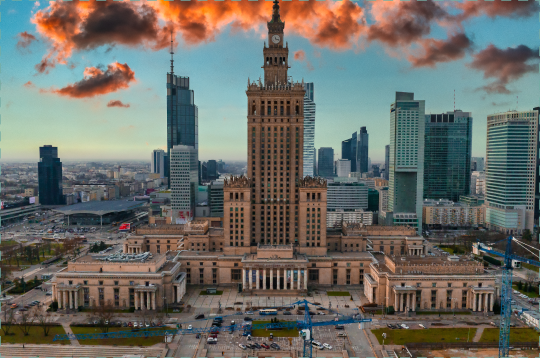
Strong areas include backend systems, cloud and DevOps, data science and machine learning, cybersecurity, and game development. The most common languages are JavaScript, Python, TypeScript, Java, and SQL. Poland's gaming industry is a useful quality signal: CD Projekt, the studio behind The Witcher 3 (50M+ copies sold), is headquartered in Warsaw.
For buyers hiring in specific verticals, Gdańsk has cluster strength in embedded systems and semiconductor R&D anchored by Intel; Warsaw ranks 21st globally in robotics ecosystems; Wrocław holds 16th globally in medtech.
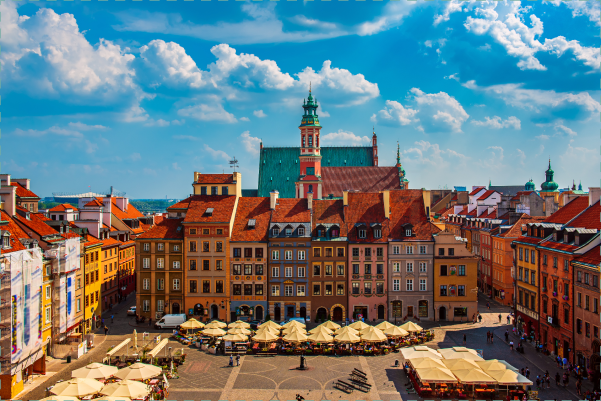
Microsoft invested $1B in Poland in 2020 (its largest-ever Polish IT investment) establishing its first regional data center with a focus on cloud, AI, and cybersecurity. Google launched its first Cloud region in Poland in 2021, invested ~$700M in expanding The Warsaw HUB, and in February 2025 announced a further $1B investment focused on AI development and cloud infrastructure. Intel, Samsung, Motorola Solutions, ABB, Siemens, and Visa all operate R&D centers across Polish cities.
Monday.com chose Warsaw as one of its three global R&D hubs. Samsara designated its Warsaw office as its European R&D hub. Wrocław alone houses 110 IT and R&D centers (IBM, Accenture, Capgemini, Dolby, Nokia, and Volvo IT) among them. Kraków hosts IBM, Motorola Solutions, Ericsson, Nokia Networks, and more than half of Poland's active tech unicorns.
Poland is not the lowest-cost option in the region. If cost efficiency is the primary driver, Ukraine, Romania, or Moldova offer more savings. Poland's advantage is the combination: senior depth, EU legal certainty, IP Box tax structures for contractors, and lower quality variance than most comparably priced markets globally.

Anastasiia Chernenka
Head of Recruitment
Leave us a note and we'll get back to you with estimates for your case.
Payroll cycle
In Poland, payroll must be processed monthly, and employee payments must be issued by the 10th of the following month.
Employer taxes
Regarding social security contributions in Poland, employers and employees contribute approximately 35% of the employee's salary. The employer's portion, ranging from 19.21% to 22.14% of the employee's gross pay, includes accident insurance, which varies based on the number of employees and the business sector.
Overtime pay
In overtime work cases, the employer must provide additional compensation to the employee, ranging from 50% to 100% of their basic remuneration. Fortunately, determining the appropriate percentage threshold during the working time settlement is a straightforward process.
Paid leave
In Poland, employees are entitled to 20 days of annual leave if they have been employed for less than ten years and 26 days if they have been employed for ten or more years. Vacation can be divided at the employee's request.
Sick leave
During sick leave, employers in Poland are required to pay employees 80% of their salary for the first 33 days of illness in a calendar year, irrespective of any breaks. However, if the employee becomes ill during pregnancy or experiences an accident while commuting to or from work, the amount increases to 100% of their salary.
Public and provincial holidays

Notice period
In Poland, the notice period for employees varies based on their length of employment. The notice period is two weeks if the employee has been employed for less than six months. The notice period is one month for employees with at least six months of employment. And for those who have been employed for at least three years, the notice period extends to three months.
13th Month Bonus
Companies do not have a legal requirement for 13th-month payments.


Get a free consultation and salary benchmarks for your stack.


